
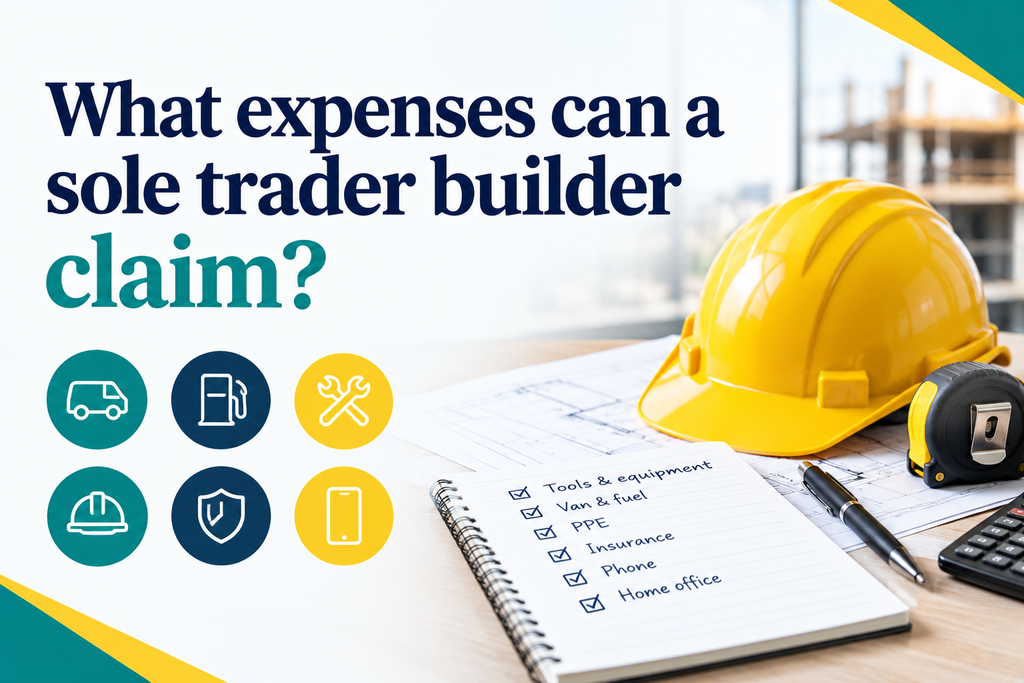
Allowable expenses for sole trader builders can include tools, PPE, insurance and certain van, fuel, phone and home office costs. But not everything you pay for is automatically allowable. The cost has to be genuinely for the business and fit HMRC’s rules, and the answer often depends on how you actually use the item.
What Counts as a Business Expense For a Sole Trader Builder?
Allowable expenses are the everyday costs of running your business that you can deduct before your tax is worked out. They don’t put money back in your pocket. They just reduce the profit you pay tax on.
The test HMRC applies is that the cost must be incurred “wholly and exclusively” for your business. If you use something for both work and home life, you can normally only claim the business share. Bigger purchases, like a van or heavy equipment, may be dealt with through capital allowances rather than as a standard expense. For more detailed guidance on what sole traders can claim, see GOV.UK’s guidance on expenses if you’re self-employed.
Tools, PPE and Equipment
This is usually the easiest category for a self-employed builder.
- Tools: Hand tools and power tools you use for your trade are typically allowable, and so is repairing or replacing them. Bigger kit may fall under capital allowances instead.
- PPE: Hard hats, hi-vis, safety boots, gloves, goggles and dust masks are generally fine. Ordinary clothing isn’t, even if you only wear it on site.
- Other equipment: Things like scaffold hire, skip hire and the materials you buy for jobs are normal construction business expenses.
Say you buy a nail gun and a set of chisels for your next few jobs. They’re bought for the trade, so they’re likely to be allowable, although the exact treatment depends on the item and how it’s used.
Keep the receipt every time, even for small buys. It’s much easier than trying to remember what you spent months later.
Van, Fuel and Travel Costs
If you use a van for work, you can usually claim for it. Vehicle costs come with their own rules, though, so you can’t just claim the lot.
There are two main routes. You can use HMRC’s simplified expenses, which is a flat rate for each business mile, or you can claim your actual running costs (fuel, insurance, repairs and servicing) plus capital allowances on the purchase. You generally can’t mix the two for the same vehicle, so it’s worth thinking it through before you choose.
The big question is business versus private use. Fuel to get to a customer’s site is a business cost. Fuel for a family weekend away isn’t. If the van does both, only the business proportion can be claimed.
Travel between home and a regular place of work is usually treated as commuting, which isn’t allowable. Travel to temporary sites can be different, but it depends on your circumstances.
For example, a builder might use their van for site work all week and for personal trips at weekends. They’d need to work out the business share of the costs, and a simple mileage log makes that far easier.
Insurance, Phone and Home Office Costs
- Insurance: Public liability, tool cover and employers’ liability (if you take on staff) are typical business insurances. Van insurance is claimable for the business share. Personal cover, such as life or health insurance, isn’t a business expense.
- Phone: You can generally claim the business proportion of your mobile bill. A separate phone or SIM for work keeps things simple.
- Home office: If you genuinely use part of your home for business admin, like quotes, invoicing and paperwork, you may be able to claim towards your household costs. HMRC allows either a flat rate based on the hours you work at home or a calculation of the actual business proportion.
A builder who uses one phone to call customers and suppliers, but also to ring family, would normally only claim the business part. The same thinking applies to a spare room used for admin.
Whenever something is part business and part private, the treatment depends on the circumstances, so it’s worth checking before you claim.
What Records Should a Builder Keep?
Good records back up every claim if HMRC ever asks questions, and they make your Self Assessment quicker and less stressful. As a rule, self-employed people should keep business records for at least five years after the 31 January submission deadline for that tax year.
A simple checklist:
- Receipts for tools, PPE and materials
- Sales invoices and supplier invoices
- Fuel receipts and a mileage log
- Insurance documents
- Phone bills, with business use noted
- Vehicle records, including purchase, servicing and repairs
- Notes on how you split business and private use
If you’re not sure what you can claim, Magnum Accountancy works with self-employed builders and tradespeople all the time and can help you claim what’s right without taking risks.
Book a free 30-minute call with Daxa at Magnum Accountancy. BOOK A FREE CALL