Yes — a healthcare business can generally claim tax relief on costs that genuinely relate to running the practice, from staff wages to clinical equipment and premises costs. But “generally” is doing a lot of work in that sentence, because the exact treatment really does come down to the nature and purpose of each expense.
So What Actually Makes Something “Allowable”?
HMRC’s test is whether a cost is incurred “wholly and exclusively” for the business. Translated out of tax-speak: the expense has to be genuinely for running your practice or clinic, not for your own benefit on the side.
A couple of things fall out of that:
- If something’s used for both business and personal reasons, only the business slice of it is usually allowable
- It doesn’t have to be essential — just reasonable, and clearly connected to the business
- Bigger purchases that last (equipment, for instance) tend to get treated differently to everyday running costs
And this applies whatever structure you’re operating under — sole trader, partnership, or limited company — though how the relief actually gets given can vary between them.
Staff Costs and Professional Fees
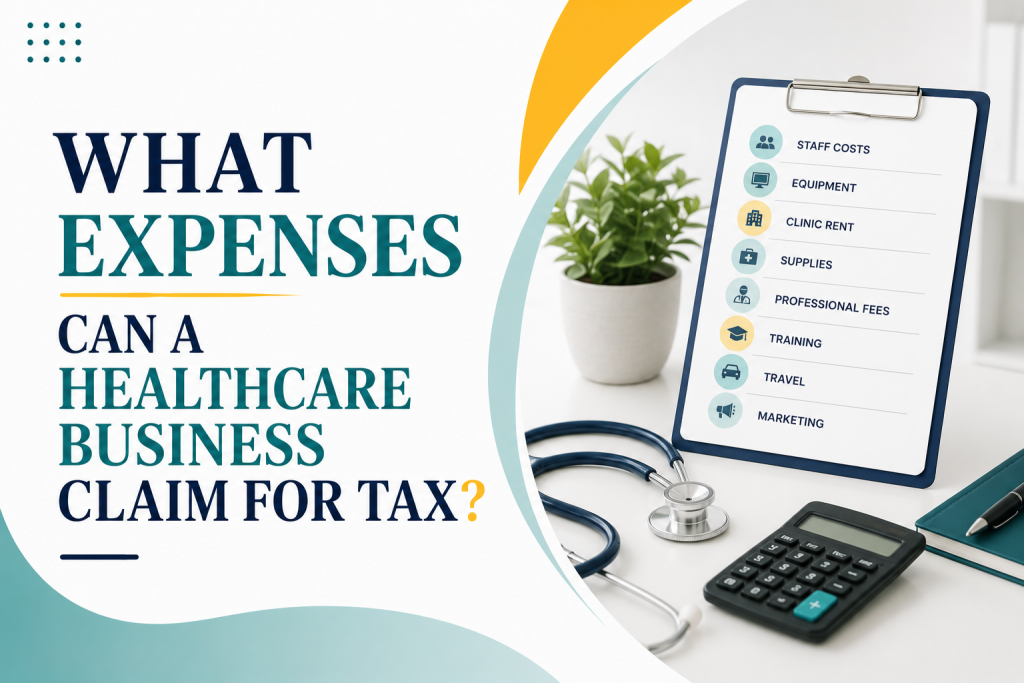
For most healthcare businesses, staff costs are one of the biggest lines in the accounts, and they’re generally allowable. That covers things like:
- Salaries, wages and employer’s National Insurance
- Locum or agency staff
- Employee pension contributions
- Fees for accountants, solicitors and other professional advisers
One area worth flagging: if you’re a director paying yourself a salary through a limited company, that’s treated quite differently to a sole trader taking drawings from the business. It’s genuinely worth getting advice on this one, because it affects your personal tax as much as the business’s.
Equipment, Premises and The Everyday Running Costs
Clinical equipment — examination tables, diagnostic tools, sterilisation kit, that sort of thing — will usually attract some form of tax relief. Bigger items, though, often get treated as capital expenditure rather than a straightforward deduction, so don’t assume every purchase works the same way.
Premises and office costs tend to be allowable too:
- Rent, business rates and utilities for your clinic or practice
- Repairs and maintenance
- A home office, where part of the home is genuinely used for the business
- Office supplies, software and IT costs
Wherever premises or equipment get used for both business and personal purposes, only the business share is normally allowable — so it’s worth keeping a note of how something’s actually used, not just what it cost.
Insurance, Training, Marketing and Travel
Professional indemnity insurance, public liability cover, and subscriptions to relevant professional bodies are generally allowable — they’re pretty much a condition of practising in healthcare. Training and CPD that keeps your existing skills up to date usually falls into the same category.
Where it gets trickier is training that gives you a brand-new qualification rather than updating one you already have — that can be treated differently, so it’s worth checking before you assume a course qualifies.
Marketing costs — your website, local advertising, printed materials — are generally fine, since they’re clearly there to bring in business.
Travel tends to catch people out. Journeys between different work sites, or to see patients, are usually allowable. The commute from home to your regular workplace generally isn’t, and if a vehicle does double duty for business and personal use, the personal portion needs to come out of any claim.
Keep The Paperwork — and Know What Doesn’t Count
Whatever you claim, HMRC will expect receipts and invoices. These should show what you bought, when you bought it, and why you needed it for the business.Good records aren’t just box-ticking — they make life much easier if HMRC ever asks questions, and they make your annual accounts more accurate in the process.
A few things people often assume are allowable but aren’t, or only partly are:
- Everyday clothing, even if you happen to wear it at work (specific clinical or branded workwear is a different story)
- Client entertaining — generally not allowable for tax purposes
- Personal costs run through the business, even now and then
- Fines or penalties, which are never allowable
Healthcare businesses tend to have a real mix of clinical, staffing and premises costs, and it’s easy for the lines to blur — especially around equipment, home working and vehicles. This is where a healthcare-focused accountant can make a real difference. The team at Magnum Accountancy can help you claim legitimate expenses while staying within HMRC rules.
If you’re unsure whether an expense qualifies, check before claiming it. The answer often depends on your circumstances and how your business operates.
Book a free 30-minute call with Daxa at Magnum Accountancy. /book-a-free-call/