Corporation Tax Planning: Must-Have Strategies for Construction Companies

Illustration of Corporation Tax Planning: Must-Have Strategies for Construction Companies

Corporation Tax Planning: Must-Have Strategies for Construction Companies

Have you ever looked at your year-end accounts and wondered where your hard-earned profits have gone? As a construction company, managing your finances can be as tough as hitting a deadline on a tricky build. But with smart corporation tax planning, you can keep more of your money in your pocket for what really matters—growing your business.

Let’s break down some must-have strategies that anyone from roofers to property developers can use to optimise their tax position.

Understand Your Eligibility for Reliefs

Many construction businesses may not be fully aware of reliefs available to them. For instance, if you’re a sole trader plasterer earning £60k a year, you could be missing out on the potential to claim capital allowances. This allows you to offset the cost of equipment and materials against your taxable profits. It’s like giving yourself a tax break just for running your business efficiently.

If you’re a housebuilder with new developments, the costs you incur during construction can often be capitalised. This means you can benefit from possible reliefs when those costs are added to the property’s value, rather than deducting them from your profits immediately.

Keep Track of CIS Deductions

If you’re working under the Construction Industry Scheme (CIS), make sure you keep detailed records of your deductions. As a contractor, you might receive invoices from subcontractors with CIS deductions already taken off. These deductions can come back to benefit you come tax time as they’re offset against your overall tax liability. Keep your paperwork straight—we’ve all heard tales of rates that get forgotten until it’s too late!

Embrace the VAT Reverse Charge

For many in the construction sector, understanding the VAT reverse charge is critical. Essentially, this means that for certain services, the responsibility for paying VAT shifts from the supplier to the customer. If you’re a subcontractor and receive a reverse charge invoice, be sure to adjust your accounts accordingly. If you miss these adjustments, you could find yourself paying VAT you don’t actually owe.

Consider Your Business Structure

The structure of your business can greatly affect your tax liability. Are you a limited company, a partnership, or perhaps a sole trader? Each structure has its own tax implications. For example, despite the common belief that limited companies face more paperwork, they often have advantages when it comes to tax planning. If you’re running a successful plant hire company, for example, switching to a limited company can lower your tax rate—especially if you’re paying yourself through dividends rather than salary.

Be Mindful of IR35

If you’re working as a contractor through a limited company, don’t overlook IR35 rules. These rules could impact how much tax you owe if the HMRC deems you to be an employee for tax purposes. Regularly review your contracts and working practices to ensure compliance. If you think IR35 could affect you, speak to a professional who understands the ins and outs of construction contracting.

Making Use of Losses

Sometimes, projects don’t go to plan, and your business might end up with trading losses. Don’t despair. You can carry these losses forward to offset future profits or even back to reclaim tax from previous profitable years. Keep a close eye on your cash flow and always consult with your accountant on how best to handle your losses.

Take Action Today

Corporation tax planning isn’t a one-off task; it’s an ongoing process. Start by setting aside time each quarter to review your financial position, making adjustments where necessary. You could save a significant sum just by staying organised and being proactive.

Not sure how this affects you? Book a free 20-minute call with us. Your future self will thank you for it!

Illustration of Corporation Tax Planning: Must-Have Strategies for Construction Companies

CIS Monthly Returns: Essential Tips for UK Construction Contractors

Illustration of CIS Monthly Returns: Essential Tips for UK Construction Contractors

CIS Monthly Returns: Essential Tips for UK Construction Contractors

Have you ever found yourself scrambling at the end of the month to get your CIS returns sorted? If you’re juggling multiple contracts and dealing with subcontractors, you’re not alone. Staying on top of the Construction Industry Scheme (CIS) can feel like a full-time job in itself.

Understand Your Responsibilities

Illustration of CIS Monthly Returns: Essential Tips for UK Construction Contractors

First things first, knowing your obligations under CIS is crucial. As a contractor, you need to register for the scheme and make monthly returns to HMRC. Simply put, you must report all payments made to your subcontractors, detailing how much tax you’ve deducted.

If you run a plumbing company, for instance, and hired subcontractors in a month, you need to gather all those invoices and calculate the deductions based on their gross payment status—whether they’re registered as gross or net. Failing to submit accurate returns on time can lead to hefty penalties.

Keep Accurate Records

Imagine you’re a builder earning £100k a year. That means juggling various payments to subcontractors. Keep a dedicated log of all transactions, including dates, amounts, and the roles of subcontractors. Good record keeping isn’t just about staying compliant; it also helps you avoid tax issues down the line.

In your monthly records, include:

  • Names and UTR numbers of subcontractors
  • Total amounts paid
  • Deductions made

Utilise Technology

Consider using accounting software specifically designed for construction needs. These tools simplify the process of calculating deductions and preparing your CIS returns. Many platforms allow you to integrate tax calculations, manage invoices, and even analyze your cash flow—all in one place.

Check the VAT Reverse Charge

Are you aware of the VAT reverse charge? This rule means that if you’re a contractor buying services from another contractor, the supplier doesn’t charge you VAT. Instead, you account for it in your VAT return. This adds another layer of complexity but is very relevant for construction businesses. By understanding this, you can make better financial decisions and improves your cash flow.

IR35 Considerations

If you’re subcontracting work through your own limited company, don’t overlook IR35. This legislation can affect how you pay yourself and your tax liabilities. If HMRC deems you to be ‘inside IR35,’ you might end up paying significantly more in tax. Staying informed and possibly consulting a tax expert can save you money in the long run.

Maximise Your Capital Allowances

As a contractor, you’ve likely invested in tools, equipment, and vehicles. Don’t forget to claim your capital allowances. These let you deduct the cost of these items from your profits, reducing your taxable income. Make sure you keep receipts and records ready for when you file your tax return.

Take Action Today

The most straightforward way to ensure you’re compliant is to set up a monthly reminder for your CIS returns and update your records regularly. This saves you from last-minute chaos. Start by listing out your subcontractors this month, check their CIS status, and make notes of any invoices you’ve received.

Not sure how this affects you? Book a free 20-minute call with us.

CIS Monthly Returns: The Essential Guide Every UK Construction Contractor Must Read to Stay Compliant and Avoid Costly Penalties

A UK construction contractor reviewing CIS monthly returns documents at a desk with compliance paperwork and a laptop.

CIS Monthly Returns: What Every UK Construction Contractor Needs to Know


It’s the 19th of the month. You’ve been on site since 7am, your phone hasn’t stopped, and somewhere in the back of your mind you know there’s a CIS return due. Sound familiar?

If you’re a contractor under the Construction Industry Scheme, missing that deadline isn’t just annoying — it can cost you money. And a lot of contractors get this wrong, not because they don’t care, but because nobody ever sat them down and explained it properly.

So let’s fix that.


What Is a CIS Monthly Return?

Contractor reviewing CIS monthly returns paperwork at a desk with construction site visible in background.

If you pay subcontractors for construction work, HMRC classes you as a contractor under CIS. That means every single month, you must tell HMRC what you’ve paid your subbies and how much tax you’ve deducted.

This is your CIS monthly return. It’s not optional. It’s not something you do when you get round to it.

The deadline is the 19th of every month, covering the previous tax month. Miss it, and you’re looking at automatic penalties starting at £100. Miss it for a few months and those fines stack up fast.


What Do You Actually Need to Report?

For each subcontractor you’ve paid, you need to include:

  • Their name and UTR (Unique Taxpayer Reference)
  • The total amount paid
  • The amount of CIS deduction you’ve made

The deduction rate depends on their verification status. Subcontractors who are verified with HMRC get deducted at 20%. Unverified subbies? You’re deducting 30%. And if you haven’t verified them at all, you could be in serious trouble.


A Real Example

Say you run a small groundworks business and you’ve got three subbies on site this month. One is fully registered under CIS with gross payment status — so you pay them in full, no deduction. One is verified at 20%. And one you took on last week and haven’t verified yet.

That last one? You must deduct 30% from the labour element of their payment and hand it over to HMRC. You can’t just pay them and sort it later. HMRC expects that money on time, reported on time.

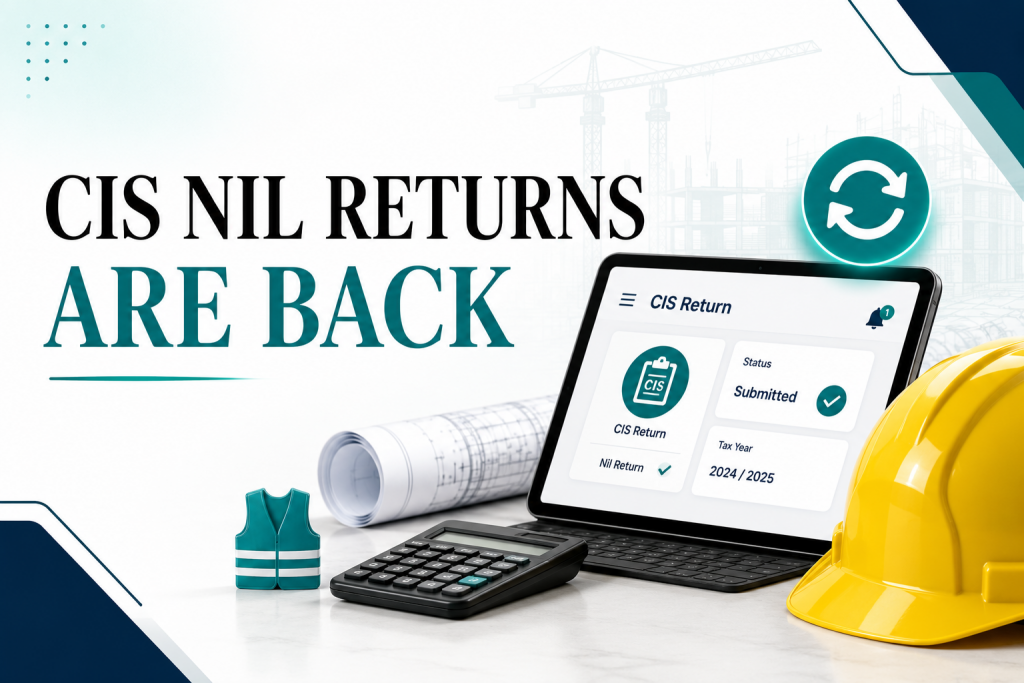
And here’s the bit people miss — even if you paid no subcontractors that month, you still need to submit a nil return. No exceptions.


Don’t Forget the Bigger Picture

CIS doesn’t exist in isolation. If you’re VAT-registered and working with other VAT-registered businesses in the supply chain, the VAT reverse charge applies to most construction services. That affects your cash flow more than you might think.

And if you’re using workers who look like subcontractors but work like employees, IR35 is something you need to think about too. Getting that wrong can mean back-tax, interest and penalties — all at once.


What Happens If You Get It Wrong?

HMRC can charge you the full amount of CIS deductions you should have made, even if you already paid the subcontractor in full. That means you could end up paying twice. Plus interest. Plus penalties.

It’s not a grey area. It’s a straightforward scheme with straightforward rules — but only if you’re on top of it.


One Thing You Can Do Today

Pull up your subcontractor list right now. Check every single one is verified with HMRC. If they’re not, call HMRC’s CIS helpline or log in to your HMRC account and verify them today.

That one step protects you from the 30% deduction risk and keeps your returns clean.


Not sure how this affects your construction business? Book your free 20-minute call with Magnum Accountancy today: