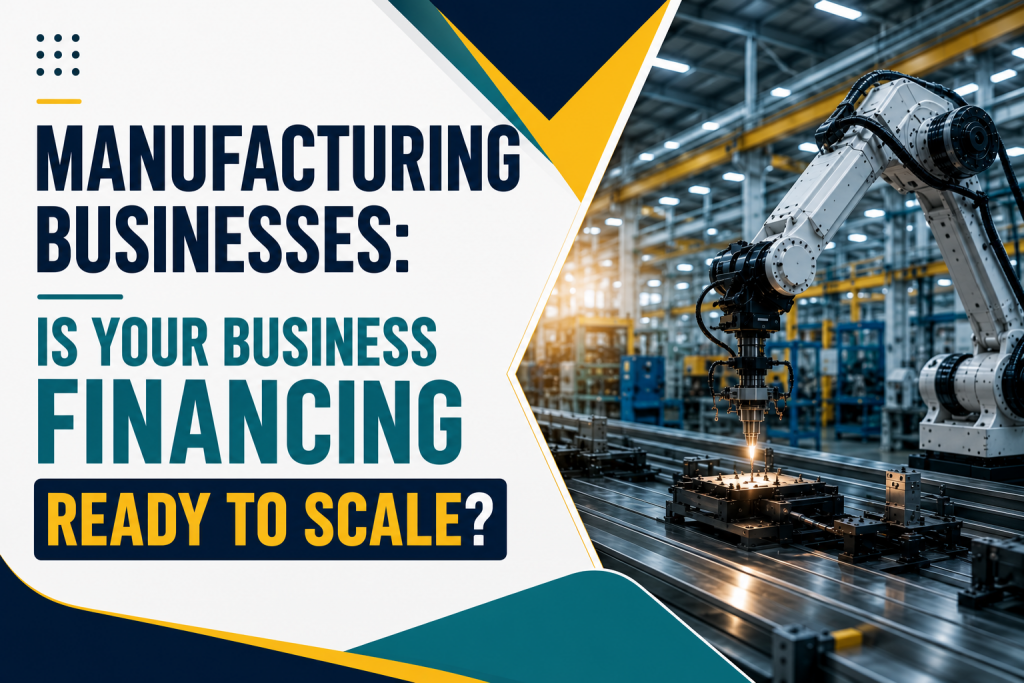
Manufacturing business growth is creating new opportunities across the UK. Recent Office for National Statistics figures show manufacturing output rose by 1.6% in the three months to May 2026. While this is positive news, many manufacturers face cash flow pressure when they begin to scale. For manufacturers who’ve spent the last couple of years managing rising costs and cautious order books, that’s genuinely good news. It’s also, in our experience, the point where cashflow problems quietly start. Read more about the latest UK manufacturing output growth and supply chain demand.
Growth sounds like the opposite of a financial risk, but it behaves differently to steady trading. More orders mean more raw materials bought upfront, more hours on the shop floor, and often a longer wait before the cash from those bigger orders actually lands. A manufacturer that was comfortably profitable at a smaller, steadier volume can find itself short of cash at a larger, busier one, even while the order book looks better than it has in years.
Who Manufacturing Business Growth Affects
This guide is for manufacturing business owners whose order volumes are increasing and who are considering hiring more staff, buying more stock, or investing in new equipment to keep pace. If demand has been flat for you, the immediate risk here is smaller, though it’s still worth understanding before growth arrives.
Why Manufacturing Business Growth Creates Cash Flow Pressure
Scaling up usually means paying for things well before customers pay you. Manufacturers buy raw materials, pay wages every week or month, then produce, deliver and invoice finished goods before they receive payment. The bigger the order, the bigger that gap tends to be. A business running close to its working capital limits at normal volume can find that gap becomes genuinely difficult to bridge once volumes rise.
Equipment adds an
How Growth Can Strain Your Cash Flow
Take a components manufacturer that had been running steadily for years, then landed a new client whose order volumes were roughly double their usual monthly output. On paper, it was the best news the business had had in a long time. In practice, the extra raw material costs landed weeks before the first invoice from the new client was due to be paid, and payroll for extra shifts still needed covering in between. The business wasn’t unprofitable, far from it, but it came close to missing a supplier payment simply because the timing of cash in and cash out hadn’t been planned around the new order size. A short conversation about working capital before accepting the contract would have avoided the scramble entirely.
How to Prepare for Manufacturing Business Growth
Before taking on a significantly larger order or client, it’s worth modelling what that specific order does to your cashflow, not just your profit and loss. Profit and cash are not the same thing, and growth tends to expose that difference quickly. Talk to your bank or finance provider about working capital facilities before you need them urgently, since arranging funding under pressure is harder and usually more expensive than arranging it in advance. It’s also worth reviewing payment terms with both suppliers and customers, since even small changes to when cash moves can materially ease the pressure of scaling up.
Prepare Your Business for Manufacturing Business Growth
Manufacturing output picking up is a genuinely encouraging sign for the sector. The businesses that benefit most from it tend to be the ones that planned their working capital before the growth arrived, not the ones sorting it out mid-order.
If you’re planning to scale and want to check your business is financially ready for it, Magnum Accountancy offers a free call to talk through what to look at first. Book yours today.