Outgrown Your Accounting Software? 8 Signs | Magnum Accountancy

Outgrown your accounting software

If you’ve started noticing limitations in your current system, you may have outgrown your accounting software. A system that suited you perfectly when you started can struggle once you have more customers, more staff and a lot more transactions. That doesn’t mean you need something bigger or pricier. It just means it’s worth checking whether your setup still does the job.

Here are eight signs to watch for, and a few things to think about before you change anything

8 Signs You’ve Outgrown Your Accounting Software

1. You rely heavily on spreadsheets and manual data entry. If you’re copying figures between spreadsheets and your software, mistakes are easy to make and hard to spot. Spending hours retyping the same information is usually a sign the system isn’t pulling its weight.

2. Your bookkeeping takes longer than it used to. More transactions are normal as you grow, but if the process feels slower every month, something isn’t keeping up. It’s worth checking whether the problem is the software itself or the way you’re using it.

3. You struggle to get a clear picture of cash flow and business performance. You should be able to see what’s owed to you, what you owe and where the business stands without piecing it together by hand. If that takes real effort, your software may not be giving you what you need.

4. Your business has grown, but your software has not kept up. Perhaps you’ve added new products, taken on more customers or changed how you charge. If your system can only cope with those changes through clumsy workarounds, it may be holding you back.

5. You find it difficult to manage multiple users, departments or locations. Once several people need access, or you want to track costs by team or site, basic software can get awkward. Limited user controls or separate files for each part of the business are common giveaways.

6. Your accounting software does not integrate well with other business tools. If your payroll, invoicing, stock or payment tools don’t connect smoothly, you end up doing the linking yourself. That’s where double entry and errors tend to creep in.

7. You struggle to produce useful reports and make informed decisions. Good reports help you decide things, like which jobs make money or where your costs are rising. If you can’t get the figures you want without exporting everything into a spreadsheet, that’s a warning sign.

8. Your current system no longer meets your business’s changing needs. Rules change too. Making Tax Digital for Income Tax began on 6 April 2026 for sole traders and landlords with qualifying income over £50,000, and the threshold drops to £30,000 from April 2027. HMRC doesn’t provide software for it, so you’ll need compatible software, or a bridging tool that links your spreadsheets to HMRC. If you’re VAT registered, you already need compatible software for your VAT returns. GOV.UK’s guidance on choosing the right software for Making Tax Digital for Income Tax is a good place to see what applies to you.

What Should You Consider Before Changing Your Software?

Spotting a few of these signs doesn’t automatically mean you need to switch. The right software depends on your size, how complex your business is and what you actually need. Sometimes a better set-up, some training or tidier processes solve the problem. Plenty of small businesses are well served by simple, affordable software, and there’s no point paying for features you’ll never use.

If you do decide to move, plan it properly:

  • Data migration: decide what needs to move across, such as customer records, opening balances and past transactions, and check it all afterwards.
  • Integration: check the new software works with the tools you already rely on.
  • Timing: if you can, avoid changing in the middle of a VAT quarter or during your busiest period.
  • HMRC requirements: if Making Tax Digital applies to you, make sure the software is compatible. GOV.UK has guidance on signing up for Making Tax Digital for Income Tax, and the House of Commons Library has a research briefing setting out the thresholds and dates.

How The Right Accounting Support Can Help

Software is only as useful as the information in it. If your numbers aren’t accurate or up to date, even the best system won’t give you reliable answers.

At Magnum Accountancy, we help small business owners get clear, dependable financial information, and work out whether their current software is still the right fit or whether a change makes sense. We can look at how you use your system, what you really need from it and how to switch without disrupting the business.

If a few of these signs sound familiar, now is a good time to review your options, even if you end up staying right where you are.
Book a free 30-minute call with Daxa at Magnum Accountancy.

Difference Between Bookkeeping and Accounting

Difference between bookkeeping and accounting

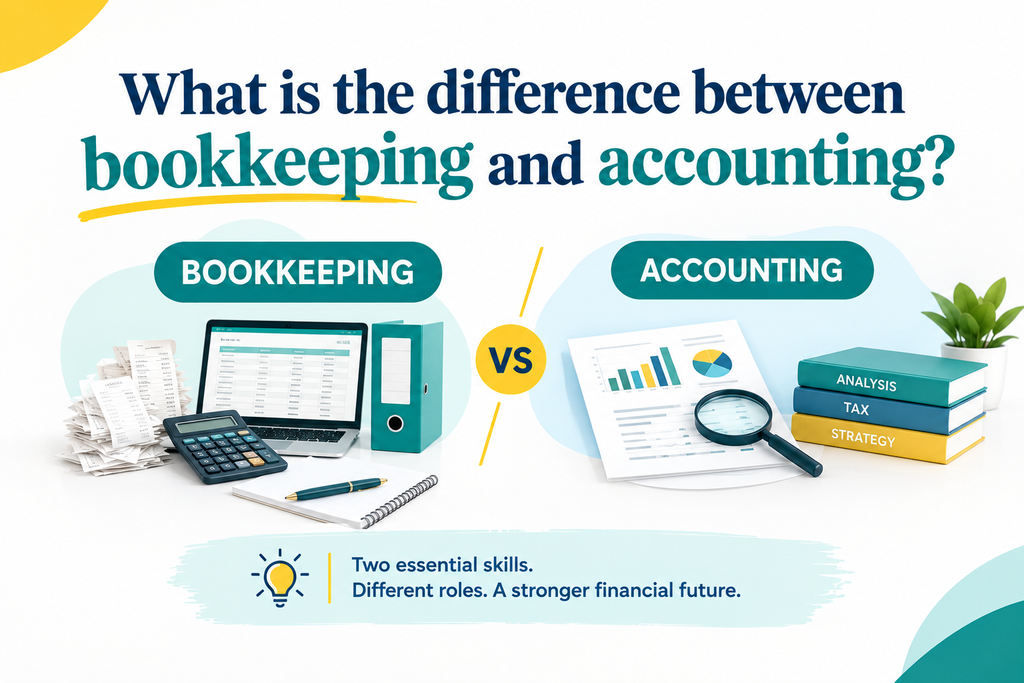
The difference between bookkeeping and accounting can be confusing if you’ve never worked with an accountant. Bookkeeping is the day-to-day job of recording and organising your business’s financial transactions. Accounting takes that information and uses it to show how the business is doing, prepare your accounts and meet your tax and reporting obligations. In short, bookkeeping creates the records and accounting makes sense of them.

If you’ve never worked with an accountant, the two terms are easy to mix up. Plenty of business owners do, so here’s what each one actually involves.

What is Bookkeeping?

Bookkeeping means keeping a clear, up-to-date record of the money coming into and going out of your business. Everything else is built on it.

In practice, that means recording your sales and purchases, logging business expenses and keeping invoices and receipts in order. It also means reconciling your bank transactions, which just means checking that your records match what has actually gone through the account. You can do this yourself or hand it to a bookkeeper, but it needs doing regularly, whether that’s weekly or monthly.

Done well, bookkeeping gives you an accurate picture of what’s happening day to day. You can see who owes you money, what you’ve spent and what’s come in, without digging through a pile of paperwork.

What is Accounting?

Accounting picks up where bookkeeping leaves off. An accountant looks at your financial information, reviews it and uses it to tell you something useful about the business.

That includes preparing your annual accounts and supporting your tax and compliance requirements. But it goes beyond that. A good accountant can show you how profitable you really are, help you make decisions with confidence and plan for what’s coming next.

So accounting isn’t only about filing a tax return once a year. It’s about understanding the numbers and what they mean for you.

What is the Difference Between Bookkeeping and Accounting?

The simplest way to remember it:

Bookkeeping = recording and organising financial information

Accounting = reviewing, interpreting and using that information

BookkeepingAccounting
Main purposeKeep accurate, organised recordsUnderstand the numbers and meet reporting and tax requirements
Typical tasksRecording transactions, reconciling bank accountsPreparing accounts, supporting tax work, giving advice
TimingOngoing, day to dayPeriodic, such as year end, plus advice when you need it
Who may provide itYou, a bookkeeper or an accountantAn accountant
How it helpsA clear view of day-to-day activityInsight, planning and compliance

Does My Small Business Need Both?

Many businesses benefit from both, but how much support you need depends on how big and how complicated your business is. You don’t have to pay for both.

A very small business might handle its own basic bookkeeping and bring in an accountant for the year-end accounts and tax. As the business grows, it often makes sense to pass the bookkeeping to someone else so the records stay accurate, leaving the accountant free to focus on accounts, tax and advice. A more established business may want regular bookkeeping alongside ongoing accounting support and regular financial reports.

Here’s how it can look in real life. A self-employed joiner records every invoice they send and every cost they pay, such as materials, fuel and tools, and matches it all against the bank. At year end, their accountant takes those records and prepares the accounts, works out how profitable the business has been and completes the tax return. They might also point out that material costs are creeping up, which gives the joiner something to act on.

What Happens if My Bookkeeping is Not Up to Date?

Nothing dramatic happens overnight, but problems tend to pile up quietly.

You may not know where the business really stands. Transactions can go missing or get recorded wrongly, which makes the accounts harder to prepare and leaves you with a mountain of work at year end. Business decisions become guesswork, and you may find gaps in the records you need for tax.

Catching up on months of receipts and bank entries takes far longer than keeping on top of them as you go.

Which one does my business need?

Have a think about these questions:

  • Do you keep your financial records up to date?
  • Do you know how profitable the business is?
  • Are you confident your records are accurate?
  • Are you comfortable preparing the information needed for your accounts and tax return?
  • Do you need regular financial advice or planning?

If keeping on top of the records is the sticking point, bookkeeping support may be what you need. If you’d like help understanding the numbers, planning ahead or sorting out your tax, you’re probably looking for an accountant. Plenty of businesses end up needing both.

At Magnum Accountancy, we help small business owners work out what level of support suits them, whether that’s a little help at year end or something more regular.

Book a free call with Daxa at Magnum Accountancy.

Choose the Right Accountant for Your Small Business

choose the right accountant for your small business

Choosing the right accountant for your small business can make managing your finances much easier. The right accountant gets your business, does the work you actually need, explains things in plain English and gives you a fee you can understand. Qualifications and experience matter, but so does whether you’d feel happy ringing them with a question. Here’s how to compare your options.

How Do I Choose the Right Accountant For My Small Business?

Start with experience. A sole trader working from a van has very different needs from a limited company with a team, so ask whether they already work with businesses like yours.

It also helps if they understand your industry. They’ll know how you get paid, what you typically spend money on and where the pressure points are, so you won’t be explaining the basics every time.

Make sure they know the rules that apply to you too. Depending on your business, that could mean Self Assessment, Corporation Tax, VAT, payroll or Making Tax Digital.

Then there’s the matter of qualifications. The title “accountant” isn’t protected by UK law, so it’s worth asking any accountant you’re considering whether they belong to a recognised professional body, and which one. You can check their membership by contacting the organisation directly.

Finally, look for someone who gives you proactive advice. Preparing your accounts is the basic job. A good accountant will also flag tax planning, cash flow issues and upcoming changes before you’ve had to ask. For more guidance on hiring an accountant, see ICAEW’s small business guide to hiring an accountant.

What Questions Should I Ask Before Choosing an Accountant?

It helps to go into that first conversation with a few questions ready:

  • What’s included in your fees, and what costs extra?
  • Do you work with businesses like mine?
  • Will I have one person I deal with regularly?
  • How often will we speak, and how quickly do you reply?
  • Do you offer tax planning or business advice?
  • Which accounting software do you work with?
  • Are your fees fixed or hourly?
  • Are you a member of a professional body, and which one?

Pay attention to how they answer, not just what they say. Clear, relaxed answers are a good sign.

Fixed Fee vs Hourly Accounting – Which is Better?

With a fixed fee, you agree a price for a set list of work, usually monthly or yearly. You know what’s coming, so budgeting is easier.

With hourly charging, you pay for the time spent. That can suit one-off jobs or work that’s hard to predict, but your final bill can be harder to pin down.

Plenty of small business owners prefer fixed fees because there are fewer nasty surprises, and you may feel happier picking up the phone without wondering if the meter is running. But neither option is automatically better. Costs vary depending on your business and what you need, so compare like with like and ask exactly what’s covered.

What are the Red Flags When Choosing an Accountant?

Be cautious if you notice any of these:

  • Fees that are unclear or keep changing. If you can’t work out what you’ll pay, ask again.
  • Slow or patchy replies. If they’re hard to get hold of before you’ve signed up, it rarely improves afterwards.
  • No interest in your business. If they don’t ask what you do or how you work, they may not be the right fit.
  • Promises that sound too good to be true. Nobody can guarantee tax savings without seeing your figures.
  • Only available at year end. You want someone you can reach when a decision can’t wait.
  • Vague answers about qualifications. Anyone you hire should be happy to explain which professional body, if any, they belong to.

One of these on its own doesn’t mean you should walk away, but a few together are worth taking seriously.

How Can I Choose the Right Accountant for My Small Business?

Here’s a simple checklist to use when you’re comparing:

  1. Write down what you need, whether that’s bookkeeping, VAT, payroll, accounts, tax returns or ongoing advice.
  2. Ask other business owners in your trade or sector who they’d recommend.
  3. Ask which professional body they belong to, and check with that organisation.
  4. Get a clear written quote showing what’s included.
  5. Find out who your day-to-day contact would be.
  6. Check they’re happy working with your accounting software, or can suggest something suitable.
  7. Ask how often they’ll be in touch and whether they offer proactive advice.
  8. Ask for references from similar businesses if you’d like extra reassurance.
  9. Notice how the first call feels. Did you understand them, and did they listen?

Speaking to two or three firms usually makes the best fit obvious. At Magnum Accountancy, we’re always happy to talk through what you need before you commit to anything.

Book a free call with Daxa at Magnum Accountancy.